





Basics
- Length:
- 72 miles (115 km)
- Time:
- 1.5 hours to drive or five hours to experience the Byway.
Description
Follow Route One through the Big Sur area and take in the California coast the way it is meant to be experienced. From rocky embankments jutting into the clear blue waters of the Pacific to sea lions and other marine life playing in the coves and on the beaches, Big Sur is arguably the best way to appreciate the natural wonders of the western coast.
Big Sur is known for its peaceful atmosphere and tranquil setting. This makes it the perfect camping destination. Kirk Creek and Plasket Creek are two of the most beautiful spots on the entire coastline, and both are prime RV or tent camping locations. For those who want to get away from the road, Andrew Molera Campground offers hike-in campsites. Mild climate and diverse terrain make hiking in Big Sur another popular activity. Whether you are looking for an exciting outing for the family, an escape from the daily grind, or a romantic trip overlooking beautiful landscapes, you will find it while hiking Big Sur.
With views of rugged canyons and steep sea cliffs, granite shorelines and windswept cypress trees, majestic redwood forests and pristine coastline, you will feel the urge do nothing but sit back and relax. Find yourself rejuvenated by the warm breeze and romantic views. Play on the patches of sandy beach that dot the coastline, or swim in one of the secluded coves. Relax at a fine restaurant with a delicious meal, or picnic on one of the beaches. No matter what you choose to do in Big Sur, you will be sure to have a relaxing getaway that you will never forget.
Tourism Resources
Helpful Links
Tourism Resources
Points of Interest
Points of Interest Along The Way
Andrew Molera State Park (CA)
In the spectacular Big Sur area, this park is still relatively undeveloped and offers visitors great hiking, fishing and beachcombing. Miles of trails wind through meadows, beaches and hilltops. A primitive walk-in trail camp, popular with hikers and bikers, is located approximately one third of a mile from the parking area.
Big Sur (CA)
The Big Sur area encompasses more than just a town. It includes miles of beautiful coastline, craggy mountain ranges, and scenic valleys. Much different than the warm sunny beaches of southern California, beaches in Big Sur are chilly even during the day,often draped in fog, or raining.
Bring jackets and blankets for romantic evenings on the beach,when the views are magical and the temperature drops. Watch for Blue, Gray, and Humpback Whales in the distance, and see Elephant Seals, Califonia Condors, Sea Otters, and Mountain Lions all enjoying the ecosystems of the Big Sur area as much as the travelers.
Directions
Highway 1
Bixby Bridge (CA)
The Bixby Bridge, completed in 1932, is a marvel of engineering and one of the top ten highest single span bridges in the world. The bridge spans across a large canyon along the Big Sur Coastline, about 18 miles south of Carmel.
The weather conditions can have a noticeable impact on the bridge's appearance, whether there are clouds partially hiding it, or sun reflecting off of the gleaming white structural supports. That quality, combined with the massive appearance of the bridge, brings countless people to photograph the bridge.
Carmel (CA)
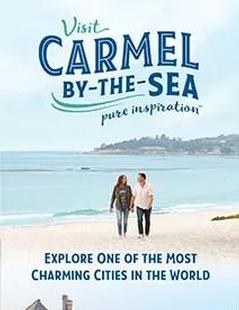
Carmel-by-the-Sea Carmel, five miles south of Monterey and 26 miles north of Big Sur,is known throughout the world for its pristine beaches and charming shops, not to mention its cozy cottages and extravagant mansions.Carmel has a unique, village charm, void of stop lights and neon signs. There are no street addresses in the town, and there is even a curfew at 10 p.m. for anyone under the age of 18. These qualities, combined with other quirky city ordinances, only add to the quiet charm of Carmel.
Carmel Mission and Basilica (CA)
The Carmel Mission, located on Rio Road off of Highway One, was the second of California's historical missions, built in 1771. At that time, Father Junipero Serra founded the Basilica of Mission San Carlos de Borromeo, one of only two basilicas on the West Coast. It is considered the jewel of California missions, and was Father Serra's favorite. He is buried near the altar. Mission San Carlos Boromeo del Carmelo has been a haven for artists and writers for over a century.
Directions
Just north of the recognized byway, travel north along Hwy 1 into Carmel, turn left on Rio Road. The mission is a short distance, and is on the left side of the road.
Hearst San Simeon State Historical Monument (CA)
The Enchanted Hill
In the Santa Lucia Mountains of California on a hilltop overlooking the Pacific Ocean, craftsmen labored nearly 28 years to create a magnificent estate of 165 rooms and 127 acres of gardens,terraces, pools and walkways. Rooms were furnished with a magnificent collection of Spanish and Italian antiques and art.Called La Cuesta Encantada (The Enchanted Hill), it is better known as Hearst Castle, once the home of newspaper publisher, art collector, and builder William Randolph Hearst.
The main house itself, "La Casa Grande," is a grand setting for Hearst's collection of European antiques and art pieces. It was also a most fitting site for hosting the many influential guests who stayed at Hearst's 250,000-acre San Simeon ranch. Guests included President Calvin Coolidge, Winston Churchill, George Bernard Shaw, Charles Lindbergh, Charlie Chaplin, and a diverse array of luminaries from the show business and publishing industries.
Hearst Castle, high above the ocean at San Simeon, was the creation of two extraordinary individuals, William Randolph Hearstand architect Julia Morgan. Their collaboration, which began in1919 and continued for nearly 30 years, transformed a rugged hilltop campsite into the world-famous Hearst Castle -- a magnificent 115-room main house plus guest houses, pools, and 8acres of cultivated gardens.
Directions
The monument is located on Highway 1, halfway between Los Angeles and San Francisco. It is a few miles south of the FHWA recognized byway, but the drive is well worth the time.
Julia Pfeiffer Burns State Park (CA)
Julia Pfeiffer Burns State Park stretches from the Big Sur coastline into nearby 3,000-foot ridges. The park features redwood, tan oak, madrone, chaparral, and an 80-foot waterfall that drops from granite cliffs into the ocean from the Overlook Trail. A panoramic view of the ocean and miles of rugged coastline is available from the higher elevations along the trails east of Highway 1.
The park also has a 1,680-acre underwater reserve which protects a spectacular assortment of marine life. Special-use permits allow experienced scuba divers to explore the reserve. Seals, sea lions and sea otters can be seen in the park's cove. Hikers can discover the park's backcountry via several trail systems.
Directions
The park is 37 miles south of Carmel along Highway 1.
Limekiln State Park (CA)
Limekiln State Park offers 43 campsites and hiking trails through majestic coastal redwoods and along spectacular ocean views. Take the short trail to four historic lime kilns, where limestone was melted for use in building.
Los Padres National Forest (CA)
Distinctive geologic, geomorphic, and botanic features make this forest one of the most traveled forests in west California.
Monterey (CA)
Historic Monterey
Monterey is one of the most historic cities in California. It is the site where Spanish soldiers first claimed the land for the King of Spain. Monterey then became the capital of the Spanish territory of California, while Monterey Bay was an important port. Later, again in Monterey, United States troops took the land for the United States of America.
The city displays its historical importance with beautifully restored historic buildings and a "Path of History" walking tour. Quaint shops reside in old adobe buildings. At the same time, the maritime influence can be seen in the city's architecture and food, while Monterey Bay's waters are still fished daily by commercial fishermen.
The author of Treasure Island, Robert Louis Stevenson, was inspired by the streets of Monterey. Other famous and significant sites are located in or near Monterey, including the Monterey Bay Aquarium and the Carmel Mission Basilica. Cannery Row and Fisherman's Wharf are two other famous sites, immortalized by the writings of John Steinbeck.
Directions
Highway One