





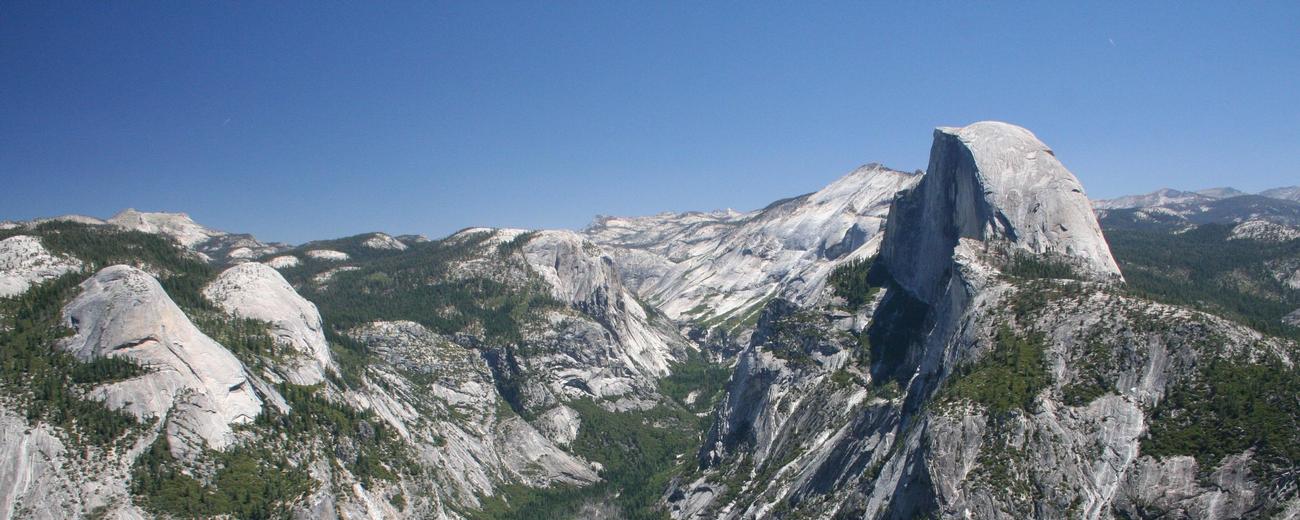





Yosemite National Park is arguably California's most famous park and occupies nearly 1,200 square miles. Take the time to read through the information below to gain a better idea of the layout of Yosemite and the best way to approach a visit to the park.
- Overview
- Yosemite Valley & South Yosemite
- Tioga Road Area
- Yosemite Backcountry
- Some Other Things To Know
Overview
All areas of the park are usually accessible by car by late May or early June. The park is open 365 days per year, 24 hours per day, although some roads may be closed during the winter season (typically October to May). A park entrance fee is $20 per vehicle and is good for 7 days. The best time to visit is spring or fall, when the crowds are thinner.
Yosemite Valley & South Yosemite
By far the most highly visited area of the park, the central route through Yosemite Valley contains most of the park's famous landmarks. This glacially-created valley is full of stunning formations, such as the striking granite faces of El Capitan and the Half Dome. Several waterfalls plummet hundreds or even thousands of feet over sharp rock faces, including the often-photographed Bridalveil Fall.
In the center of the Valley is Yosemite Village. The Yosemite Valley Visitor Center is located here, as well as a park museum and the Ansel Adams Gallery, with prints by the famous photographer and other artists. The Yosemite Lodge and several campsites are also nearby.
South of the main Valley complex, the road continues to the park's South Entrance, which can be approached along Highway 41 North from Fresno. Mariposa Grove near here is a grove of giant sequoia trees, the tallest more than 200 feet high and 30 feet in diameter. Also nearby is the historic Wawona Hotel and the Pioneer Yosemite History Center, where you can see horse-drawn wagons and historic buildings out of Yosemite's past.
Tioga Road Area
Tioga Road is the secondary park road, crossing over the mountains seen from Yellowstone Valley as it connects the Big Oak Flat Entrance to the west with the Tioga Pass Entrance to the east. The higher elevation means that Tioga Pass is closed in winter and spring until the snow melts, but when the spectacular 39-mile drive is open, it offers jaw-dropping vistas and unparalleled scenery.
Tuolumne Meadows is the highlight of this area, a large, open sub-alpine meadow graced by the winding Tuolumne River and surrounded by majestic peaks and domes. Numerous trails depart from the meadow, offering chances to get away from the roads to find wildlife and quiet. In the winter, the meadows are a popular destination for cross-country skiers or snowshoers.
Yosemite Backcountry
Over 95% of Yosemite National Park is designated as Wilderness, meaning no permanent structures or other services are allowed. If you like roughing it, heading into this undiscovered section of the park opens up hundreds of square miles of pristine terrain linked by a comprehensive network of trails. Trails continue into the surrounding backcountry areas, including the Emigrant, Hoover, and Ansel Adams Wilderness Areas and the Sierra, Inyo, Toiyabe, and Stanislaus National Forests.
A free backcountry permit is required for overnight stays in Yosemite. Permits are limited and in high demand. Reservations can be made, but the park also reserves 40% of availability to give out on a first-come, first-served basis each day.
Some Other Things To Know
Pets
If you choose to bring your pet to Yosemite, please abide by these regulations:
- Pets are only allowed
- in developed areas
- on fully paved trails and roads except trails signed as not allowing pets (pets are not allowed off the floor of Yosemite Valley, including the trail to Vernal Fall)
- in campgrounds (except Tamarack Flat, Porcupine Flat, and walk-in campgrounds)
- Pets are not allowed
- on unpaved or poorly paved trails, or trails signed as not allowing pets
- on unplowed roads covered in snow
- in Wilderness areas
- on shuttle buses
- in concessioner lodging areas
- in Tamarack Flat, Porcupine Flat, and all walk-in campgrounds
- in any group or horse camps
- Pets must be restrained on a leash not more than six feet long or otherwise physically restrained
- Leashed pets may not be left unattended
- For the courtesy of other visitors, human companions are responsible for cleaning up and depositing pet feces in trash receptacles
- Remember that pet food is also bear food: store pet food as if it were human food.
A few places where pets are allowed, contrary to the general prohibition regarding pets on unpaved roads: the Meadow Loop and Four Mile fire roads in Wawona, on the Carlon Road, and on the Old Big Oak Flat Road between Hodgdon Meadow and Hazel Green Creek.